I became acquainted with the
Spady Cultural Heritage Museum via their
Instagram page on Social Media and have been following them for several years now. I am not quite sure just how or when the intro was made but suffice it to say that I found their posts interesting and informative regarding the center's history in connection with
Delray Beach,
Florida, which is my home State in which I left in 1978, after high school on
Miami Beach, for service to our country in the
U.S. Army while stationed primarily at
Ft. Bragg,
NC. Fast forward nearly half a Century and I find myself living in both States while learning, absorbing, and conveying each's intriguing history.
I had the occasion of working the Delray Beach area providing contract transportation via
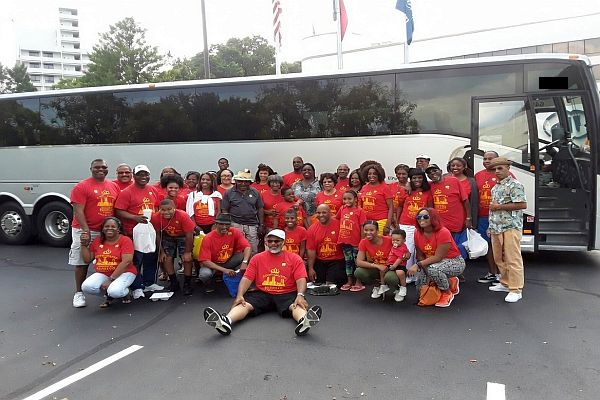
Queen City Tours® before the
COVID-19 Pandemic (circa 2019) and took a liking to it's beaches and night life which included a free
Christmas event in
Downtown. I had no idea that this quaint beach town had any connections with
Florida's Black history as that topic was never taught to us in grade school through high school. A recent post from Spady announcing their
100th Anniversary in 2026 was my impetus to contact them for this article/interview. It was only a few days after my inquiry that I received a favorable interview response from
Ms. Michelle Brown who works with the team at the Spady Cultural Heritage Museum. She has been very prompt and professional in providing me with all of the information and images needed to piece together the following article/interview with
Ms. Charlene Farrington, the museum's
Executive Director.
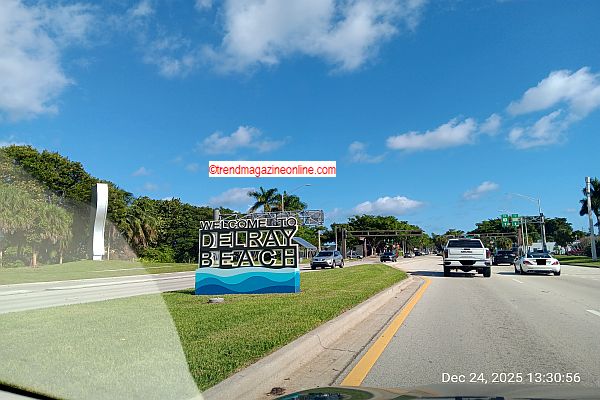
Welcome to Delray Beach Sign
Jay – Ms. Farrington, the Spady Cultural Heritage Museum is approaching its remarkable
100th Anniversary — what emotions come to mind as you reflect on this milestone in
Delray Beach’s Black/African-American cultural and educational history?
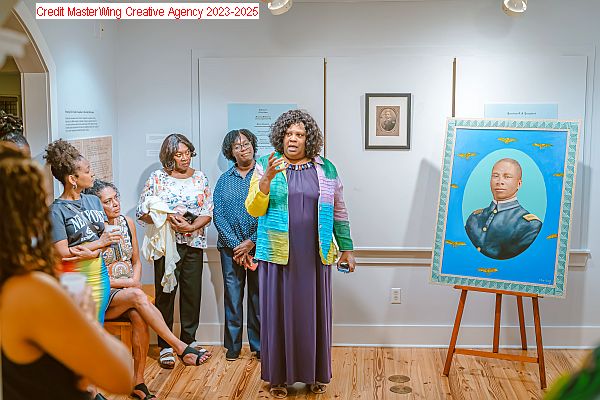
Spady Cultural Museum 100th Anniversary Kickoff
Ms. Farrington - Emotionally, I feel a great deal of pride. It is rare when evidence of Africans’
contributions to America’s modern society are preserved and made available for everyone to enjoy. After serving
as director for so many years, when I walk past
The Spady House, home to the Spady Cultural Heritage Museum, I
have a better understanding of what this historical structure means to the elders and historians of our region.
This is proof positive, in the form of a
1926 home, that African-Americans [Blacks] contributed, built, labored,
created and are due an enormous amount of credit for being educators, advisors, counselors and leaders. I’m very
proud of the work we’ve all done to ensure that
The House Still Stands for multi-generational appreciation and legacy.
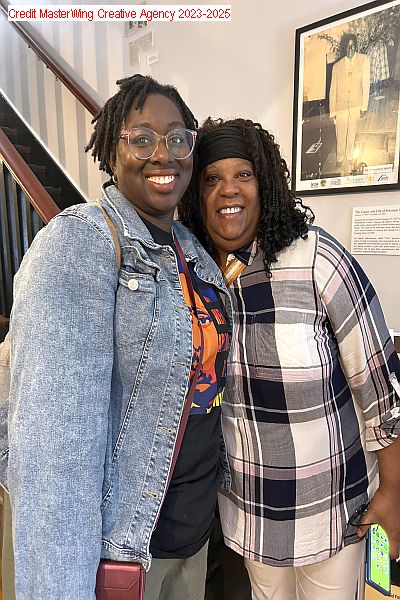
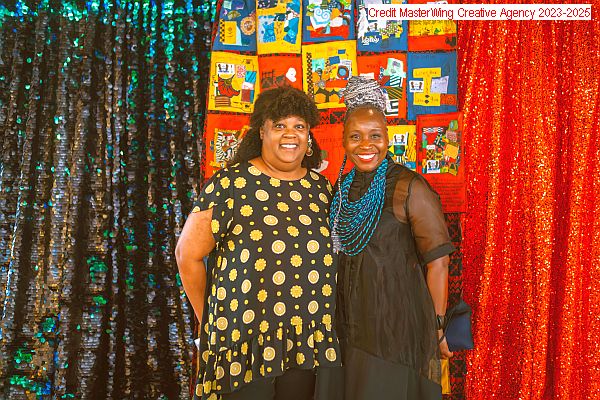
Spady Cultural Museum Bernier (l) Farrington (r)
Jay – For those unfamiliar, could you share the origins of the Spady House and the vision of its founder,
Solomon [David] Spady [1887 - 1967], within the context of early 20
th-century Palm Beach County and the pioneering families who helped
shape the community?
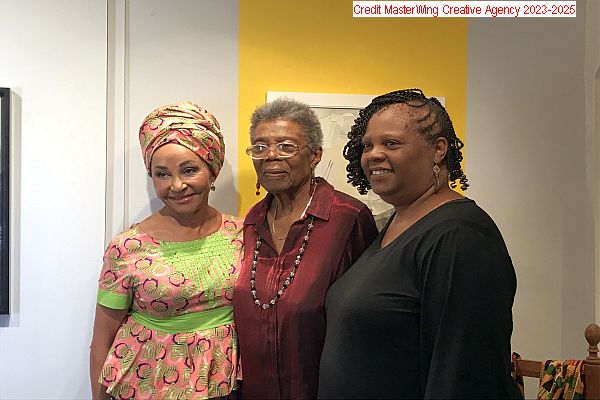
Spady Cultural Museum Mnhambuv (l) Farrington (r)
Ms. Farrington – Solomon D. Spady came to Delray Beach in 1922 as the third African-American [Black]
public school principal and teacher assigned to the area. He arrived upon the recommendation of
George Washington
Carver, and his tenure lasted 35 years.
Mr. Spady was born January 17, 1887 in
Cape Charles,
Virginia. In 1914, he received a teaching certificate from the state of Virginia and began his career in public education in Cape Charles. He became affiliated with the New Farmers of America, the largest black farm youth organization in the world, during which time he made a lasting acquaintance of the renowned agricultural chemist, Dr. Carver.
Mr. Spady came to Delray to accept the teaching position, which also carried the responsibility of principal. The name of the school, which was established in 1895, had been changed from
Delray Colored Number 4 to
Delray County Training School. The school had an enrollment of 100 children, grades 1 thru 8. Under his tutelage, the student body grew to 336, grades 1 thru 10 in 1934, and in 1939, the first 12
th grade high school graduation was held.
On June 2, 1926, he married the daughter of a prominent family,
Jessie B. Green. No children were born to this union. Mr. Spady was a man of keen insight and vision, and the community relied upon his knowledge in the areas of personal finance and investments to grow. His home was constructed in about 1925 and completed prior to July 1926. The address was
170 Blackmer Street, which is now NW 5th Avenue. It was built as a two story single-family residence, rectangular in shape and “stucco over frame” construction with a stone foundation. That was considered a step above the other homes that were primarily wooden structures. It was and still is Mission Revival style; it had eight rooms, four rooms upstairs and four rooms downstairs. It was the first home in the area to have indoor plumbing, a telephone and electricity. He also had an unattached garage for his automobile. This is the building chosen for the Spady Cultural Arts Museum, in honor of Professor Spady.
Mr. Spady departed this life in Cape Charles, Virginia November 25, 1967,
at age 82. His legacy lives on in the lives that he touched.
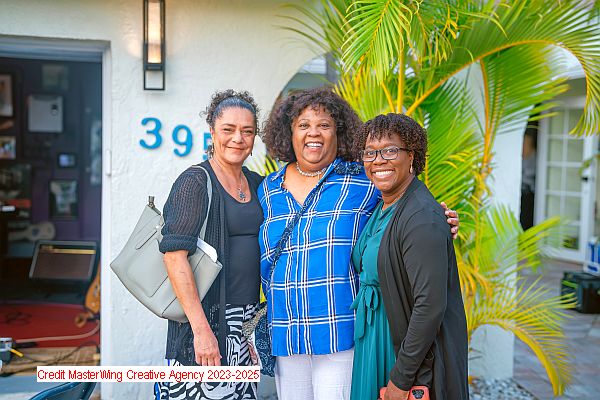
Spady Cultural Museum S. Blake (l) C. Farrington (c) B. Shaw (r)
Jay – Under your leadership, the museum has evolved into a vibrant center for generational storytelling and learning.
How do you engage younger audiences who are navigating identity, technology, and culture in today’s changing social landscape?
Ms. Farrington – We are very proud of the work being done to engage younger audiences through the museum’s
Black History Education Study Program, which was launched in 2024. Currently,
the museum is seeking sponsors and
grant funding to expand the program into 2026 and beyond.
When the program was first announced, it garnered national media attention (
Associated Press), as part of a trend in education of nonprofit organizations filling the history gaps in school district curriculum. The initial
Black History Study curriculum, led by local educators, provided historical context of Black history as originating in Africa and followed the progression of American history, as experienced through Black people. Special attention was given to Florida history and the roles local
Native American and
African inhabitants played in its development. The first season’s curriculum was held on weekends, which encouraged several parents to stay for the lesson; the multi-generational participation led to the program’s growth.
For season two, which runs from 2024-2025, enrollment for the program expanded include adults, along with middle- and high-school students. A dual-track curriculum was developed with the expertise of
Brian Knowles, a former School District educator and founder of
Power Builders Curriculum and Pedagogies,
LLC.
Mr. Knowles led a module during Season 1 that explained the origination and impact of hip-hop music on America’s political, cultural and economic histories. Season 2’s curriculum integrates technology, creative projects, and field trips into Black History, and it has also garnered national media attention (
TheGrio.com). For example, teenage participants create pod casts sharing their perspectives on curriculum lessons. Adult participants engage in lively Zoom discussions with workshop leaders, exploring the intersection of American history, their lived experience within that history, and how they feel about both.
Season 2 enrollment increased 45 percent over Season 1, so we are working on the third and fourth season curriculum now.
Elements of the Black History Education Study program are designed to educate people on Black History global facts, but also to give teens and adults space to talk about what they know, from personal experience, and what this intersection of history and experience means to them. For the teenage students, the program gives them a forum to compare what is happening now to what they are taught in school, in the media and from their relationships. We want them to put their education to use, engaging in pod casts and field trips to cultural organizations around the county. We also bring in relevant speakers to testify about what the students are learning, sharing their perspectives and how modern-day events are affecting their lives. The Black History Education program curriculum is a road map or tool to help people make decisions to guide their lives going forward.
Jay - From your partnerships with educators and artists to programs like the
Black History Bus Tours, cultural festivals, and historical exhibits — which initiatives have had the most lasting impact on community awareness and engagement?
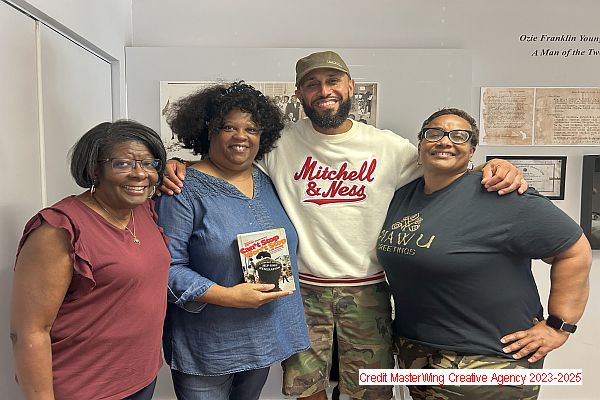
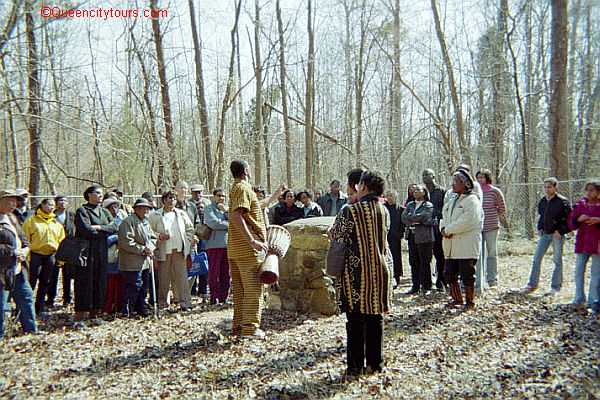
Spady Cultural Museum Farrington (2nd l) B Knowles (c)
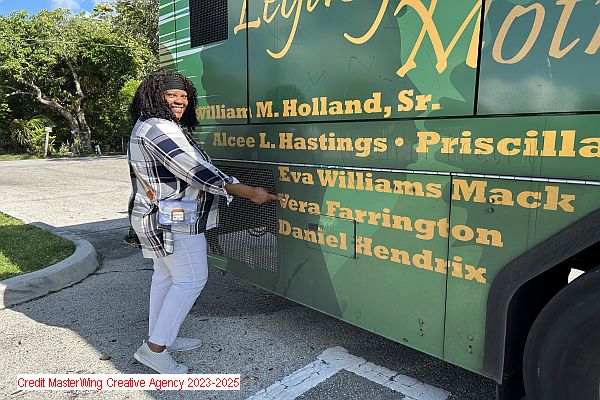
Ms. Farrington – The Black History Bus Tours have been the most in demand, so we are bringing them back in 2026
for the public to enjoy. Staff took a hiatus from offering the tours due to cost and the pandemic’s after-effects.
However, the calls for its return have continued, prompting the re-launch of the
Ride, Remember & Discover Bus Tours from January through April 2026.
The Ride, Remember & Discover Bus Tour takes riders on a journey through the city’s living and preserved history. Riders will tour the Spady Cultural Heritage Museum and other locations; disembarking at select historic sites for a closer look at the fascinating history of Delray Beach, which includes stories about its founders from the
African Diaspora,
Asia and
Europe.
The tour has a lasting impact on community awareness and engagement because it offers something that our community and visitors all seem to desire -- a multi-cultural, inclusive, comprehensive -- yet personal -- history lesson that brings people together over commonalities, rather than dividing them. Everyone always comments on how much they enjoy our balanced and accurate depictions of Delray Beach history, so we are giving the people what they want! To book this tour for groups of 10-28, please contact the museum at (561) 279-8883 or
email us at info@spadymuseum.org.
Additionally, the aforementioned Black History Education Study program is having tremendous impact, as evidenced by the anecdotal feedback we are receiving and the increased enrollment across age groups. Our community also has an appetite for the cultural programming that the museum provides, which the City does not, such as our ultra-popular
Kwanzaa Celebration, our often sold-out
Dr. Martin Luther King Jr. Brunch and our well-attended
Juneteenth programs. In 2026, we will welcome
Mary Graham Grant, a sweet grass sewer and artisan from the
Gullah Geechee region of
Georgia. During her three-day residency, she will hold a workshop on sweet grass sewing, in which cultural and historical traditions will be shared with a multi-generational audience.
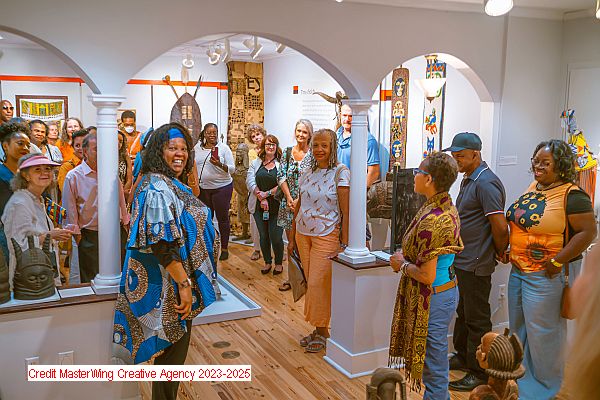
Spady Cultural Museum Thresholds Opening
Jay – You’ve been photographed collaborating with cultural leaders such as
Dr. Dorothy Raing,
an educator and historian noted for her work on African diaspora studies, and
Marsha Brown, an artist and storyteller whose projects celebrate Palm Beach County’s
Black/African-American heritage. How have partnerships with visionaries like these strengthened
the Spady Museum’s mission of preserving and expanding cultural understanding across generations?
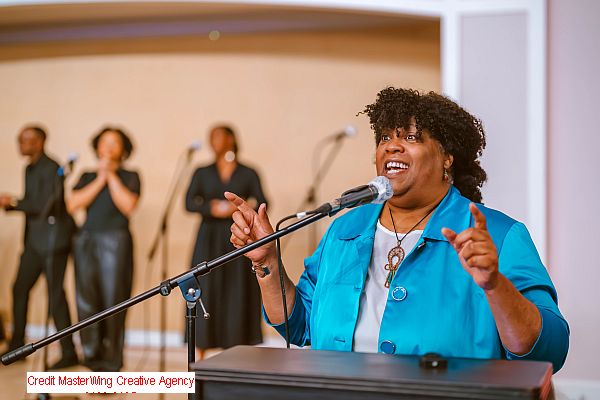
Ms. Farrington - Our valued partnerships have allowed the museum to reach new audiences, offer richer, more nuanced programming, and create opportunities for discovery that we could not do alone. From our exhibitions, which have included guest lecturers, to our festivals, which have featured popular drumming sessions, the museum relies heavily upon our partners to bring a depth and excitement to our offerings and vision for the future.
The Spady House is the community’s House, and therefore, we operate with the community, for the community and by the community -- to share a well-known phrase. Our partners make it possible for the museum to remain relevant, in-tune, and abreast of what our members, residents and art-seekers want. We could not do this work without them.